Transform Your Garage with Durable Interlocking Flooring
Cost-Effective Alternative to Epoxy Coatings
I remember the first time I encountered a garage floor that refused to stay smooth. The concrete was cold, dangerous, and stained with oil. In a place like South Africa, where heat and rain attack surfaces without mercy, the solution often lies in clip lock garage floor tiles. These interlocking modules create a resilient top layer that remains solid under heavy boots and vehicle wheels.
Epoxy finishes promise a perfect gloss, yet they demand perfect dryness and careful preparation. When they fail, they fail completely! Clip lock garage floor tiles offer a cost-effective alternative to epoxy coatings. They install quickly, tolerate temperature swings, and absorb impact without chipping.
This is the kind of durable, interlocking flooring that changes the character of a space. Here is what stands out:
- You can lift and replace a single tile without disturbing its neighbours.
- Spilled petrol will not soak into the surface beneath.
Quick and Clean Installation Process
Transforming a garage in Johannesburg or Cape Town rarely takes more than a weekend. Clip lock garage floor tiles snap together without adhesive, without grinding, and without the dust that comes with surface preparation. I have watched homeowners lay an entire double garage in a single afternoon.
The process is simple. You start at one corner, click the tiles into place, and work your way across the floor. A rubber mallet is the only tool required. The result is a surface that looks deliberate and finished, not makeshift. Clip lock garage floor tiles eliminate the mess entirely.
- No curing time means you can park on it immediately
- No chemical fumes or solvents
- No waiting days for the floor to harden
That immediate usability matters. You finish the job, move the car back in, and carry on with your day. The garage transforms from a stained concrete afterthought into a clean, structured workspace.
Superior Durability and Impact Resistance
The average double garage floor endures thousands of kilograms of rolling weight each week. A bakkie loaded with tools, a motorcycle dropping off its stand, a fridge dragged across the concrete. Standard surfaces crack and stain within a year. Clip lock garage floor tiles handle this punishment without breaking down.
Each tile uses high density polypropylene, a polymer that flexes under impact instead of shattering. Drop a heavy toolbox and the surface rebounds. Park a 2.5 ton SUV and the load spreads across the interlocking grid. That resilience means the floor keeps its structure for years.
Versatility for Multi-Purpose Garage Use
In South Africa, the garage is the most hardworking room in the house. It parks the SUV, stores the camping gear, and hosts the Sunday braai when the wind picks up. I have watched a single garage shift from carport to workshop to party venue in one weekend. Clip lock garage floor tiles handle that workload without cracking.
The interlocking grid moves between roles. One week the space is a home gym, the next a workshop for restoring a classic Beetle. A home office during the day becomes a kids’ play zone by evening. The tiles stay level and clean through each shift.
Consider what a multi-purpose floor endures:
- A welding spark landing near a workbench
- A mountain bike dripping mud after a morning ride
- A freezer defrosting in summer heat
Clip lock garage floor tiles take all of it and still look tidy for the next function.
Essential Features to Evaluate Before Buying Garage Floor Tiles
Material Quality and Thickness
Few garage floors are honest about their composition. When I press a thumb into a cheap tile, it yields; clip lock garage floor tiles resist with dense, mineral firmness. The polymer base matters. Polypropylene compounds that include UV stabilisers handle the Highveld sun without fading or turning brittle. Recycled materials often feel softer and degrade faster, so a datasheet is essential.
Thickness matters more than you might think! A 4.5 millimetre tile suits a bicycle or occasional car, but a bakkie or SUV demands at least 6 millimetres. The load rating, not the label, is the true guide. Manufacturers list weight capacities per square metre, and these vary wildly!
Certain indicators are worth noting:
– A uniform surface with no pinholes or warping
– Consistent thickness across all corners
– Reinforced ribs on the underside
These indicators separate resilient tiles from those that will crack within a season.
Interlocking Mechanism and Edge Fit
Interlocking mechanism and edge fit are where many garage floor tiles betray their promise. A loose tongue and groove system shifts under load, creating gaps that collect dust and frustrate every sweep. When I test clip lock garage floor tiles, I look for a positive click, not a vague push. The tabs should seat with a firm snap, and adjacent edges should sit flush enough that a fingernail cannot find a seam.
Some manufacturers use oversized tolerances. That leads to tiles that fit on day one but separate after a few thermal cycles. The best systems use a double locking mechanism, one that resists both lateral and vertical movement.
Here is what separates a precise fit from a frustrating one:
- Edges that align without force
- A locking tab that engages fully
- No visible light between tiles
A tight edge fit also prevents moisture from seeping underneath, which matters in coastal regions. Without a secure interlock, even a premium tile becomes a loose collection of parts.
Surface Texture and Slip Resistance
Rain, dust, and oil make garage floors in South Africa a demanding surface. A glossy tile may look sharp in a showroom, but it becomes a liability once moisture meets tyre rubber. Surface texture controls how safe your garage feels, day after day.
Clip lock garage floor tiles should carry a raised coin pattern or a directional rib. These profiles help water drain and keep footing secure. I test by pouring water on a sample and dragging a heel across it. If the tile does not bite, it fails.
What to examine:
The depth and density of the raised pattern
Performance when wet, dusty, or coated in oil
Ease of cleaning without trapping grit
A shallow texture suits a showroom, not a working garage. A deeper texture handles real use and hides minor wear. Choose traction that matches your routine, whether you park a bakkie or run a workshop bench.
Chemical and Stain Resistance
Brake fluid, battery acid, and spilled engine oil. These are the quiet enemies of a garage floor. A tile that shrugs off these chemicals saves you from permanent staining and crumbling surfaces. I have seen cheap tiles turn blotchy after a single transmission fluid leak!
Clip lock garage floor tiles should resist common automotive fluids without swelling or discolouring. The polymer density determines this. A high density polypropylene tile repels solvents and oils better than a softer blend.
Consider what routinely hits your floor:
- Engine oil and diesel
- Battery acid and coolant
- Brake cleaner and thinners
Each substance attacks a weak tile differently. Some cause warping. Others leave dull white marks. Check the manufacturer’s chemical resistance chart. If no chart exists, ask for a sample and test it yourself.
Load Capacity and Weight Tolerance
A bakkie loaded with firewood can press a tonne through four tyre patches the size of your hand. Your garage floor needs to handle that load. The load capacity of clip lock garage floor tiles separates a floor that lasts from one that deforms and fails.
Weight tolerance matters more than you might expect. I have watched cheap tiles crater under a trolley jack, leaving permanent dimples that collect oil and dirt. A quality tile distributes load through its ribbed underside, spreading force across the full surface.
Compare these load ratings:
- Light residential: 2,000 kg per square metre
- Heavy domestic: 3,500 kg per square metre
- Commercial workshop: 5,000 kg per square metre or more
South African garages host everything from Land Cruisers to lathes. A tile rated for 2,000 kilograms per square metre suits a standard car. A workshop with a two-post lift demands more.
A Practical Guide to Installing Interlocking Garage Flooring
Preparing the Subfloor: Cleaning and Leveling
Most installation failures trace back to a dirty or uneven subfloor. In my experience, that is the real culprit. Before placing clip lock garage floor tiles, sweep away all dust and degrease oil stains with a concrete cleaner. A pressure washer handles stubborn grime. Let the concrete dry completely for at least 48 hours. Trapped moisture will cause problems later.
Leveling comes next. Run a straightedge across the floor to locate cracks and high spots. Fill depressions with self leveling compound. Grind down protrusions. South African garages often slope slightly toward the door for drainage, which is fine. The tiles flex enough to accommodate that.
Keep these items ready:
- Broom and concrete degreaser
- Pressure washer
- Self leveling compound
- Straightedge and chalk line
A clean, flat base allows the interlocking edges to seat properly. That single step determines whether your floor lasts or fails.
Planning Your Layout and Starting Point
Most garage floors in South Africa are not square. Walls bow, corners drift, and the eye deceives you. Before clipping the first tile, I measure the room at several points and check both diagonals. A difference of more than 10 mm means your starting line must come from the longest straight wall, not the centre.
That wall becomes your reference. Snap a chalk line parallel to it. Dry fit a row of clip lock garage floor tiles across the width to see how cuts land at the opposite edge. The corner farthest from the garage door is the correct launch point. It pushes the cut tiles toward the threshold, where they are less noticeable.
When you place clip lock garage floor tiles, keep a 5 mm expansion gap along the perimeter. Work row by row, locking each tile firmly before moving on. A skewed grid will haunt every subsequent row!
Connecting the Tiles: Tips for a Snug Fit
There is a satisfying moment when two clip lock garage floor tiles meet and click into place. The trick is to angle the tile slightly, then press down with even pressure. I have seen people force tiles flat, which stresses the locking mechanism and leaves visible gaps.
Perfection comes from the sequence. Start with the clip edge, not the recess. If the tile resists, lift it and try again rather than leaning into it with body weight.
Check each connection as you go:
- Run your hand across the seam to feel for unevenness
- Look for light between the tiles
- Confirm the surface is level before locking the next row
The goal is a monolithic surface, where each clip lock garage floor tile behaves as part of a single system. Loose connections shift under vehicle weight and collect dust over time.
Cutting Tiles for Edges and Obstacles
Few garages are truly rectangular. Walls bow, support pillars intrude, and drainage channels break the grid. This is where cutting clip lock garage floor tiles becomes the difference between a clean finish and a visible compromise.
Measure each gap at several points, never trust a single reading. Mark the tile face with a straight edge, then score along the line with a utility knife. Several firm passes beat one deep cut. Snap the tile along the scored line and file away any rough edges. For circular obstacles like pipes, a jigsaw with a fine tooth blade works best.
Order your cuts carefully:
– Measure the gap at multiple points
– Transfer measurements onto the tile with chalk
– Cut slightly oversize, then trim down
– Test fit before locking the tile into position
Unfinished edges on clip lock garage floor tiles catch tyres and trap dust. Sand or grind every cut edge smooth before installation.
Finishing Touches: Edging Strips and Ramps
The final edge deserves the same attention as the first tile. Edging strips cover the exposed sides of clip lock garage floor tiles where they meet the wall. A ramp bridges the height difference between the garage floor and the driveway, preventing a hard lip that can catch tyres and cause trips.
Aluminium transitions suit this role well. They are durable, easy to cut with a hacksaw, and sit flat against the concrete. Fit them in a specific order:
- Lay the edging strip along the finished edge and mark overlaps
- Cut slightly long, then file ends clean
- Use construction adhesive, not screws that can loosen
Entrance ramps need a wider footprint. A 45 degree slope feels gentle, but 30 degrees suits low profile cars better. Order these with your clip lock garage floor tiles so the metal finishes match. They are a small budget addition, yet the finished edge looks deliberate and lasts.
Common Installation Mistakes to Avoid
Most installers trip on the same few hurdles when fitting clip lock garage floor tiles. The first mistake is rushing the subfloor. A broom sweep is not enough. Dust and grit sit beneath the tiles, causing them to shift and creak under load. Another common error is starting without a clear reference point. Work from the longest straight wall, and check your square every few rows.
Temperature also matters. Tiles stored in a cold garage become stiff and brittle, which leads to cracked lugs when you hammer them together. Let them acclimatise for a day before installation.
Common mistakes to avoid:
- Skipping the expansion gap at the walls
- Using a rubber mallet on the wrong side of the interlock
- Cutting tiles without measuring twice
A little patience with clip lock garage floor tiles saves a full redo later.
Keeping Your Garage Floor in Top Condition: Maintenance and Care
Daily Cleaning with a Broom or Dry Mop
Daily cleaning with a broom or dry mop is the simplest way to preserve the surface of your clip lock garage floor tiles. Dust and grit act like sandpaper underfoot, slowly wearing down the texture over time. A quick sweep each morning removes these particles before they embed deeper into the seams.
For a more thorough routine, a dry mop with a microfiber head catches finer debris that brooms miss. You do not need harsh chemicals or pressure washers. Water and a mild detergent are sufficient for occasional spot cleaning, but avoid soaking the edges where tiles meet.
Consider these small habits:
- Keep a dedicated broom by the garage entrance.
- Mop after any heavy DIY project.
Persistent dirt can be lifted with a soft brush attachment on a vacuum. The interlocking design of clip lock garage floor tiles prevents dirt from settling into gaps, which makes daily care surprisingly quick.
Deep Cleaning for Tough Stains and Spills
Engine oil and brake fluid are the two most common substances to end up on a garage floor. Neither has to become a permanent stain. The dense PVC surface of clip lock garage floor tiles resists absorption, so you can tackle the spill while it is still wet. A shop rag lifts most of the mess. Dried residue needs a plastic scraper, which removes the gunk without gouging the surface.
This is where people reach for industrial solvents. Skip that aisle entirely. Warm water and a degreaser, applied with a soft brush, handles the job.
– Wipe up fresh spills immediately
– Use a plastic scraper for dried residue
– Rinse with clean water after any chemical treatment
The seams between clip lock garage floor tiles are tight enough to stop liquids from seeping underneath, but a stubborn spill can still find the gap. Rinsing and wiping the affected area keeps the locking edges clear of grime.
Protecting Against Scratches and Tire Marks
Tire marks tell a story of daily life. The heat of rubber meeting surface, the weight of a vehicle pressing down. clip lock garage floor tiles handle this pressure with a dense PVC surface that resists the black scuffs most floors accumulate. Scratches from tool chests, jack stands, or dragging a heavy workbench across the slab are common culprits. The tiles absorb the abrasion without showing permanent damage.
– Place rubber mats under workbench legs
– Lift, do not drag, heavy equipment
– Clean tire marks with warm water and mild soap
A quick sweep removes the grit that can scratch the surface over time. This simple habit keeps the floor smooth and preserves the interlocking edges that hold the system together. With clip lock garage floor tiles, the protection is built into the material itself, not a coating that wears away. I have seen floors in daily use for years that still look sharp after a simple rinse. That staying power is what makes them worth the investment.
Seasonal Care for Changing Weather Conditions
South African weather rarely stays gentle for long. Highveld summers push concrete slabs to expand, while coastal winters bring salt air and persistent rain. Clip lock garage floor tiles respond to these shifts better than a painted coating ever could. The PVC material stays flexible in the heat and does not grow brittle when the temperature drops, so the surface keeps its shape through the whole calendar.
Each season leaves its mark in ways that matter little to this flooring:
– Summer heat sends fine dust under the door, which a broom clears in a minute.
– Winter rain loads the air with moisture, but the tile surface stays unaffected.
– Spring winds carry grit across the slab, yet nothing works its way between the locks.
Water is the real wear factor for any floor. Because clip lock garage floor tiles lock together without a chemical bond, the seams stay tight but allow the surface to absorb ordinary movement. That gives South African homeowners a floor that asks for very little attention, no matter what the forecast brings.
Creative Design Ideas for a Personalized Garage Space
Pattern Options: Herringbone, Diagonal, and Basketweave
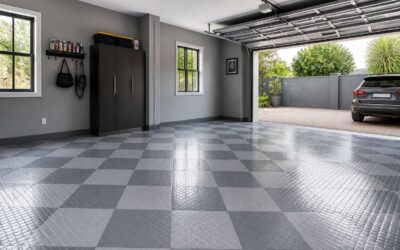
Most garage floors settle for straight lines, but clip lock garage floor tiles allow more deliberate geometry. A herringbone layout sets each tile at forty-five degrees to its neighbour, creating a rhythm that reads as fine joinery. Diagonal patterns pull the gaze toward the back wall, making a narrow garage feel wider. Basketweave pairs tiles into a checkerboard of small rectangles, lending a formal textile quality.
In Johannesburg and Cape Town, I am seeing builders and homeowners request these layouts for entertainment areas and home gyms. Clip lock garage floor tiles click together without adhesive, so a pattern can be lifted and rearranged if the effect does not match the room. A border in a contrasting shade, or a central diamond made from rotated tiles, adds visual interest.
A herringbone or basketweave floor breaks up the visual noise of tyre marks and scuffs, keeping the surface presentable between deep cleans.
Color Schemes for High Contrast or Subtle Blends
Color choice transforms a garage floor into a personal statement. High contrast schemes, such as black tiles with white borders, create crisp edges that define zones for parking or workouts. Subtle blends, where slate tones merge with soft grey, offer a calm backdrop that lets furniture and equipment stand out.
I often advise clients in Pretoria to test two or three shades before committing. Since clip lock garage floor tiles click together without adhesive, you can swap a section in minutes. For example:
- Anthracite paired with natural cream for a bold perimeter
- Warm terracotta offset by pale sandstone for a sunlit feel
- Muted olive and charcoal for a quiet, organic look
The result is a floor you control, not a showroom default.
Adding Texture or Metallic Accents for Style
Texture does more than prevent slips. A brushed surface catches light differently than a smooth one, and that subtle variation can turn a plain garage into a layered space. I have seen workshops where a single strip of textured tiles near the workbench divides the area without needing walls. Metallic accents work the same way. A few copper-toned tiles scattered through a grey field add a soft gleam that shifts as the sun moves across the floor.
With clip lock garage floor tiles, these details are easy to test:
– A fine grit surface under the car area for grip
– A smooth metallic section as a visual marker near shelving
– A checker of charcoal and bronze for a quiet industrial feel
You can lift a section and rearrange the entire composition in minutes, which matters as your taste evolves.
Combining with Wall Panels and Storage Solutions
Your garage is not a parking afterthought. In South African homes, the garage often becomes a workshop, a pantry, and a tool library. The floor shapes how you use that space, and wall panels plus storage systems complete the picture. I have seen clip lock garage floor tiles transform a chaotic room into a deliberate working area.
Start with a bold tile pattern to define traffic lanes. Then coordinate wall panels to match those zones. For storage, think vertically. A few ideas:
- Mount tool boards over a contrasting tile section
- Place heavy racks where reinforced tiles provide support
- Colour code bins to echo the tile palette
When the wall systems align with the floor layout, the entire garage feels intentional. The tiles let you test that alignment without permanent commitment.



0 Comments